First Responders
Our program equips law enforcement officers, firefighters and paramedics with resources, skills and confidence to pursue leadership roles in their communities.
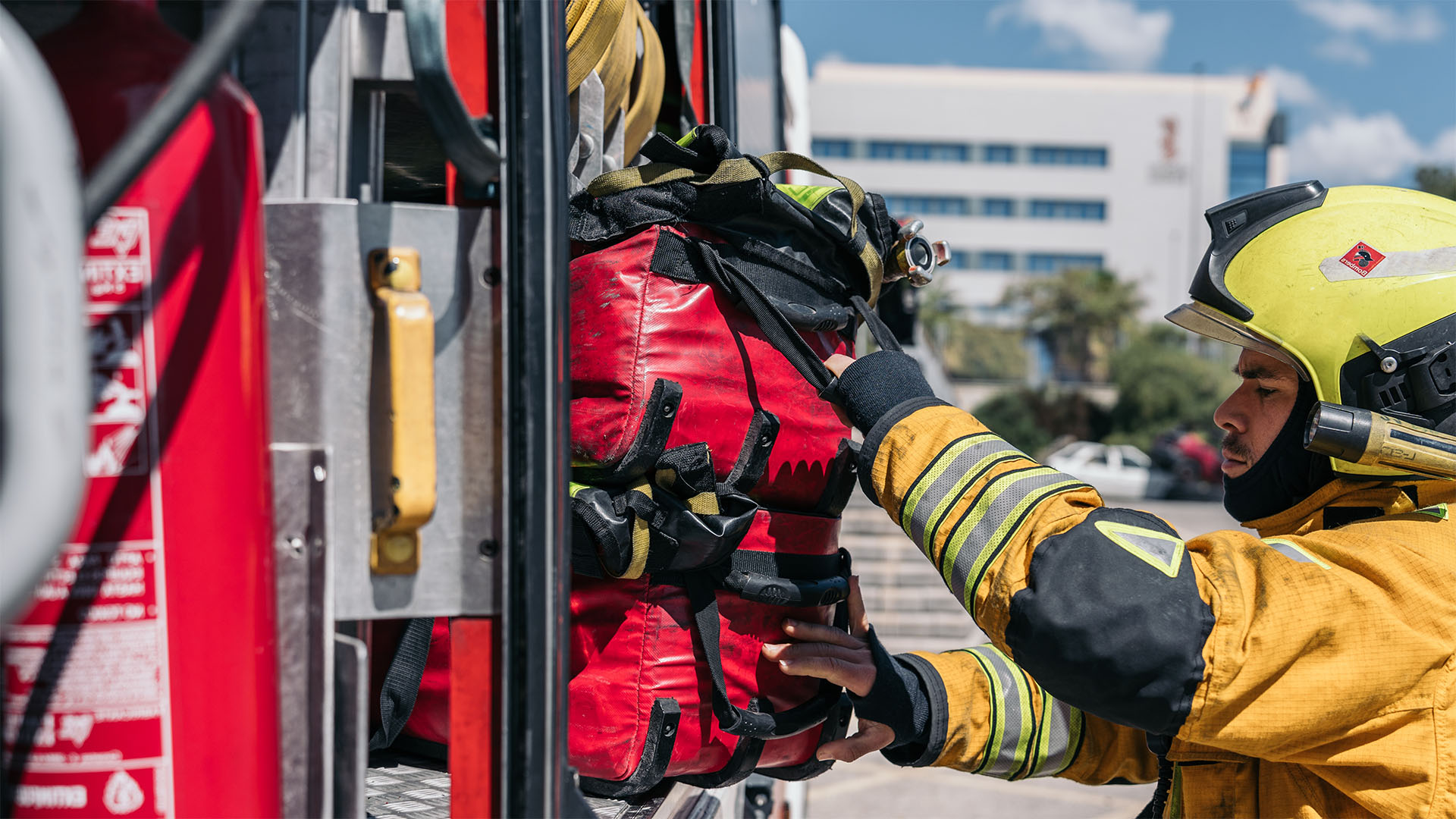
The Master of Science in Emergency and Disaster Management at the University of St. Thomas prepares professionals to protect communities, manage crises and lead with integrity across all phases of emergencies and disasters.
Graduates of the program will be well-prepared to assume leadership roles in emergency management agencies, non-profit organizations, government agencies and private sector entities engaged in disaster preparedness, response, recovery and mitigation. Upon completion of the program, you will be able to:
The MS in Emergency and Disaster Management is designed for a broad range of students seeking to broaden their expertise and serve their communities. For licensed professionals, some EDMG coursework may count toward continuing education credits.
Our program equips law enforcement officers, firefighters and paramedics with resources, skills and confidence to pursue leadership roles in their communities.
Whether you are a government employee or a professional working in the corporate or non-profit world, the MS in Emergency and Disaster Management will prepare you to be leader in the space — and to work across the boundaries that can exist between agencies.
You will explore the intersection between emergency management and health crises, focusing on the preparedness, response, recovery, and mitigation strategies necessary to address public health emergencies and pandemics.

Designed for busy professionals, this fully online and asynchronous program offers the flexibility to learn on your schedule. Engage with expert faculty, collaborate with classmates, and apply your learning directly and immediately in your career.
This part-time online program features flexible start times throughout the year.
The rotating curriculum consists of 10 courses completed in 2 years across 4 semesters and a single summer term. Students take just one course at a time, making it easier to balance the coursework with your personal and professional life. There are no course prerequisites, so you can begin your degree with any course.
To provide flexibility to all learners, our courses are taught in the online asynchronous modality. We will foster personal interaction through optional synchronous online small-group meetings, faculty office hours, guest lectures, and networking events.
The program has a simple online application process.
This part-time online program features flexible start times throughout the year.
The rotating curriculum consists of 10 courses completed in 2 years across 4 semesters and a single summer term. Students take just one course at a time, making it easier to balance the coursework with your personal and professional life. There are no course prerequisites, so you can begin your degree with any course.
To provide flexibility to all learners, our courses are taught in the online asynchronous modality. We will foster personal interaction through optional synchronous online small-group meetings, faculty office hours, guest lectures, and networking events.
The program has a simple online application process.
This degree is expected to take 2 years, with just a single course at a time. This sample degree plan gives you an idea of the courses you will take each semester. While these are the program courses, this sequence is a sample and the order in which we offer the courses may vary.
EDMG 500: Foundations of Homeland Security and Emergency Management
EDMG 501: Communication and Interagency Collaboration in Emergency Management
EDMG 502: Climate Change, Vulnerability, and Hazard Mitigation
EDMG 503: Disaster and Society
EDMG 504: Cybersecurity and the Role of Artificial Intelligence in Emergency Management
EDMG 505: Natural Hazards and Manmade Disaster Case Studies
EDMG 500: Foundations of Homeland Security and Emergency Management
EDMG 501: Communication and Interagency Collaboration in Emergency Management
EDMG 502: Climate Change, Vulnerability, and Hazard Mitigation
EDMG 503: Disaster and Society
EDMG 504: Cybersecurity and the Role of Artificial Intelligence in Emergency Management
EDMG 505: Natural Hazards and Manmade Disaster Case Studies
EDMG 506: The Role of Emergency Management in Public Health Crisis
EDMG 507: Emergency Management for Business Industry: Business Continuity
EDMG 557: AI Literacy for Leaders (cross-listed with MAIL 557)
EDMG 607: Identifying AI Opportunities (cross listed with MAIL 607)
EDMG 506: The Role of Emergency Management in Public Health Crisis
EDMG 507: Emergency Management for Business Industry: Business Continuity
EDMG 557: AI Literacy for Leaders (cross-listed with MAIL 557)
EDMG 607: Identifying AI Opportunities (cross listed with MAIL 607)
Relevant Courses Taught By Experienced Faculty

Dr. Tanya Gladney is Associate Professor in the Department of Justice and Society Studies and Director of the MS in Emergency and Disaster Management program. Dr. Gladney has 10 years of law enforcement experience with State Capital Police in Jackson, MS and eight years with the United States Army Reserve. She has worked extensively with local police departments by providing and assisting with cultural awareness and implicit bias training. Dr. Gladney is a governor-appointed member of the Minnesota Peace Officer Standards and Training (POST) Board, where she serves on the training and rules committees.

The Mikulay/Misencik Endowed Graduate Scholarship will be awarded by the College of Arts and Sciences to students in MS in Emergency and Disaster Management program. Recipients must maintain acceptable grades based and satisfactory academic performance. Preference is given for individuals who are involved in volunteer, co-curricular or community service activities.
Take the Next Steps
Learn more about earning a MS in Emergency and Disaster Management or the University of St. Thomas — request more information or attend a virtual Information Session.
The CAS Graduate Student Handbook and Course Catalog outlines requirements and policies for students in our graduate programs and compiles information on all of the college's graduate courses. Any issues not mentioned in this handbook are governed by general University of St. Thomas Graduate Policies.