
• Home
  • Degrees and Programs
  • Graduate Programs
  • English and Creative Writing
Favorites ()
Apply
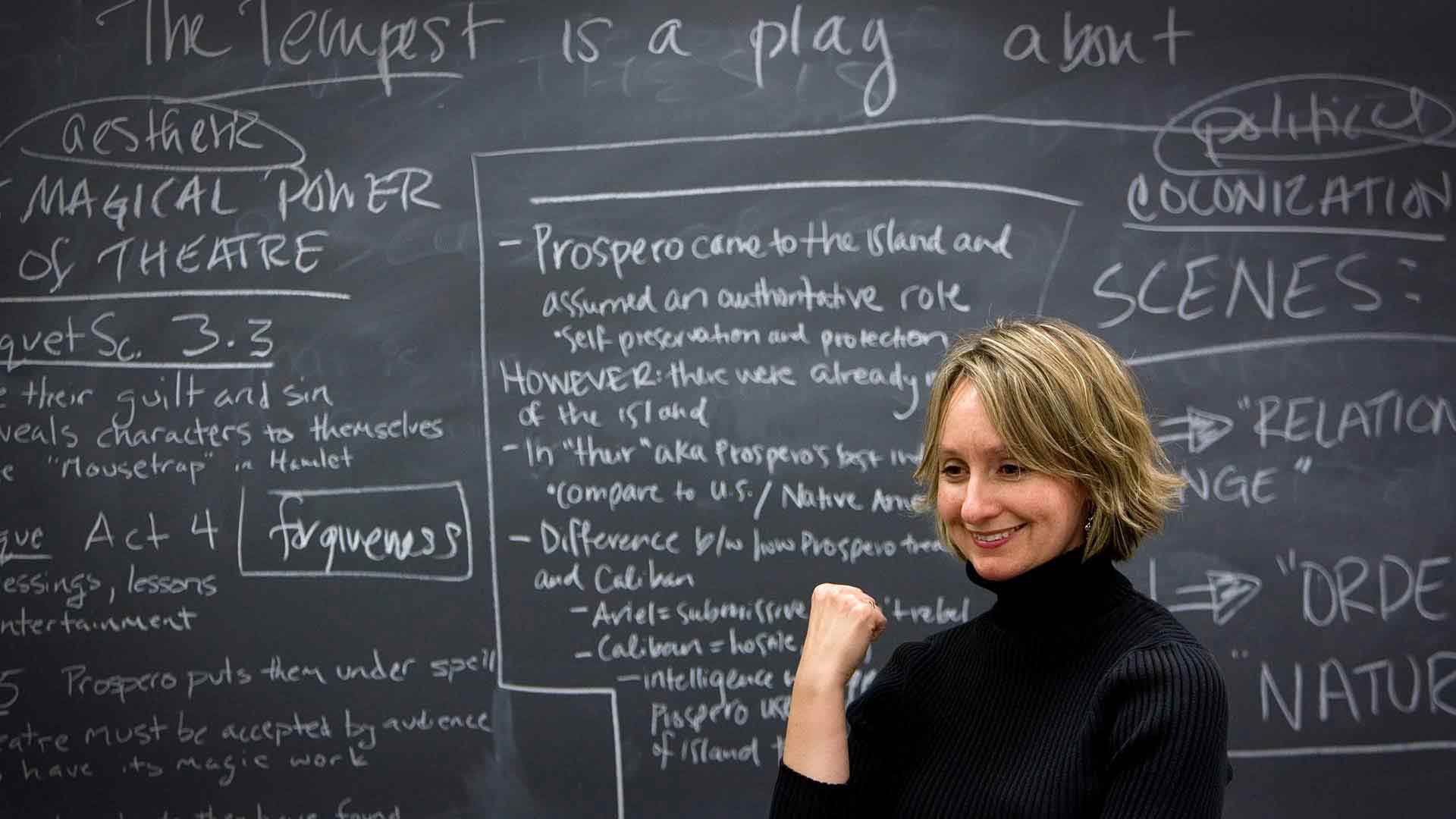
Dr. Amy Muse in front a chalkboard teaches a class on The Tempest

Critical frameworks for the literature classroom

Certificate in Teaching College English

Teaching College English in the Schools

Created in consultation with St. Paul Public Schools, the UST credentialing program meets the Higher Learning Commission's requirements for teaching college English in Minnesota high schools. We have designed this program to meet the needs of teachers by emphasizing multicultural literatures and English pedagogy. We also offer a variety of extracurricular activities designed to promote collaboration and exchange between teachers enrolled in the program.

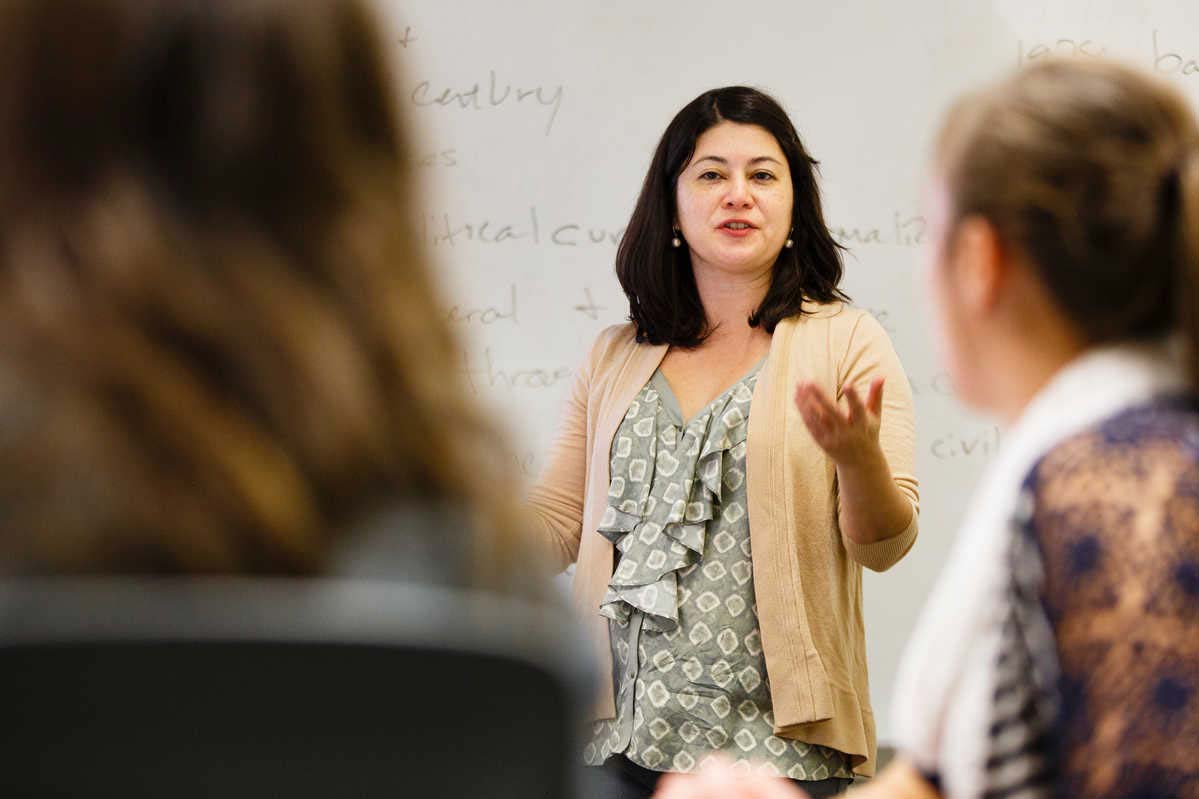
Dr. Olga Herrera leads classroom discussion in front of a whiteboard.

Get a feel for the program

For individuals with an undergraduate degree in education and your teaching license, this is the next step. Take advantage of our flexible schedule and sign up for classes that will help you get better at something you're already good at.

Program Overview

  • Degree Overview
  • Core Courses
  • Identity & Power Course
  • Elective Courses
  • Final Project
  • Degree Overview

    Students will complete a total of 6 courses (18 credits) to expand their knowledge of literature, writing, and pedagogy, with a focus on multicultural contexts. The courses include the following:

    • GENG 513: Introduction to Graduate Studies in English (3 credits)
    • GENG 507: Teaching College English (3 credits)
    • 1 course in Identity & Power (3 credits)
    • 2 elective courses (6 credits)
    • GENG 697: Final Project (3 credits)

    Core Courses

    • GENG 513 - This course provides an introduction to the expectations and conventions of graduate study, including research and writing methodology. It will explore the major contemporary approaches to literary studies in the context of various traditions of literary theory and criticism. It encourages students to assess constructively some of the key controversies in contemporary critical theory and apply their learning to the interpretation of literary texts.
    • GENG 507 - This course explores the history, theory, and practice of teaching literature and writing at the college level. Students will reflect on the connection between theory and practice in English pedagogy.

    Identity & Power Course

    Identity & Power courses examine issues of identity and power in the construction, theorization, or interpretation of texts written by, about, or addressed to marginalized groups. Recent course offerings include:

    • GENG 558: Multi-Generational African American Drama
    • GENG 560: Transatlantic Novels
    • GENG 659: Postcolonial Narratives
    • GENG 658: Reading Rural Blackness
    • GENG 658: Legacies of the Black Arts Movement

    Elective Courses

    Students take two elective courses for a total of 6 credits. Students also have the option to design their own Independent Study course. Recent course offerings include:

    • GENG 516: Critical Eco-Feminism
    • GENG 529: Romantic Ecology
    • GENG 547: The Politics of Emotion
    • GENG 572: History of the English Language
    • GENG 647: American Literature: Freedom and Constraint

    Final Project

    GENG 697 - Under the supervision of a faculty advisor, students complete a master’s project as the final requirement for their degree. Students have an opportunity to research a topic in their field or complete a detailed lesson plan or curriculum project. Students present their work to a review committee of a faculty advisor and two additional faculty readers. Students also share their work at the end of the semester at our celebratory presentation event.

    Degree Overview

    Students will complete a total of 6 courses (18 credits) to expand their knowledge of literature, writing, and pedagogy, with a focus on multicultural contexts. The courses include the following:

    • GENG 513: Introduction to Graduate Studies in English (3 credits)
    • GENG 507: Teaching College English (3 credits)
    • 1 course in Identity & Power (3 credits)
    • 2 elective courses (6 credits)
    • GENG 697: Final Project (3 credits)

    Core Courses

    • GENG 513 - This course provides an introduction to the expectations and conventions of graduate study, including research and writing methodology. It will explore the major contemporary approaches to literary studies in the context of various traditions of literary theory and criticism. It encourages students to assess constructively some of the key controversies in contemporary critical theory and apply their learning to the interpretation of literary texts.
    • GENG 507 - This course explores the history, theory, and practice of teaching literature and writing at the college level. Students will reflect on the connection between theory and practice in English pedagogy.

    Identity & Power Course

    Identity & Power courses examine issues of identity and power in the construction, theorization, or interpretation of texts written by, about, or addressed to marginalized groups. Recent course offerings include:

    • GENG 558: Multi-Generational African American Drama
    • GENG 560: Transatlantic Novels
    • GENG 659: Postcolonial Narratives
    • GENG 658: Reading Rural Blackness
    • GENG 658: Legacies of the Black Arts Movement

    Elective Courses

    Students take two elective courses for a total of 6 credits. Students also have the option to design their own Independent Study course. Recent course offerings include:

    • GENG 516: Critical Eco-Feminism
    • GENG 529: Romantic Ecology
    • GENG 547: The Politics of Emotion
    • GENG 572: History of the English Language
    • GENG 647: American Literature: Freedom and Constraint

    Final Project

    GENG 697 - Under the supervision of a faculty advisor, students complete a master’s project as the final requirement for their degree. Students have an opportunity to research a topic in their field or complete a detailed lesson plan or curriculum project. Students present their work to a review committee of a faculty advisor and two additional faculty readers. Students also share their work at the end of the semester at our celebratory presentation event.

    Faculty

    Our faculty members are accomplished scholars who produce cutting-edge research; they also take pride in being master teachers and mentors. Courses and seminars are capped at 14 and 12 students, respectively, allowing for lively classroom engagement and personalized attention. The flexibility of our evening course schedule allows students to engage in a rigorous academic program while pursuing other career and personal goals.

    Susan Callaway

    Dr. Susan Callaway

    Dr. Callaway’s teaching and scholarship focuses on inclusive and anti-racist pedagogy and writing assessment, culturally relevant pedagogy, and Universal Design in Learning. In her classrooms and as director of the Center for Writing, she encourages challenging academic ableism, disability invisibility, language injustice, the consequences of AI on the development of reading, writing, and critical thinking abilities, and implicit bias. She is especially interested in enabling graduate students to challenge their own practices and beliefs to transform their own writing and classrooms. In addition to teaching in the Certificate Program, Dr. Callaway teaches in the literature and writing core curriculum and works with students hired to work in the Center for Writing.
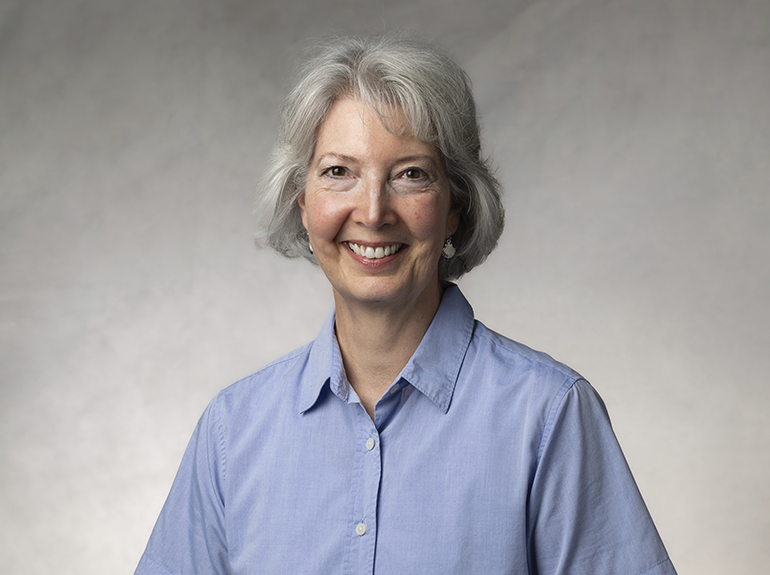
    Dr. Susan Callaway
    Dr. Erika Scheurer

    Dr. Erika Scheurer

    Dr. Scheurer’s teaching and scholarship have focused on writing theory and pedagogy in various contexts: first-year and developing writers; preparation of middle and high school English teachers; and, through Writing Across the Curriculum (WAC), support for university faculty incorporating writing in their teaching. In addition to being the founding WAC Director at St. Thomas, Dr. Scheurer has taken a leadership role and conducted scholarship connected to various cross-curricular initiatives, including Information and Research Literacy, the Academic Development Program, and Contemplative Pedagogy. She also organizes Emily Dickinson reading marathons whenever she teaches a course on the poet.
    Dr. Erika Scheurer
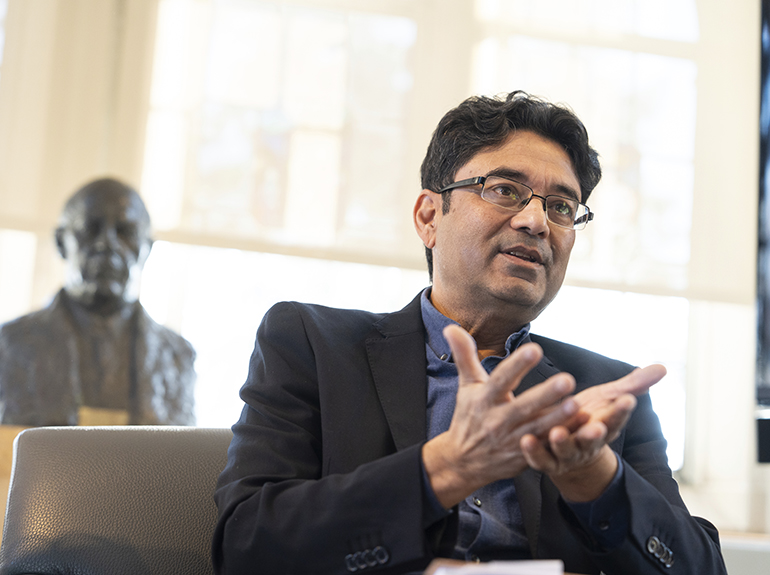
    Dr. Kanishka Chowdhury speaks

    Dr. Kanishka Chowdhury

    Dr. Chowdhury's interests focus on the ways culture, politics, ethics, and aesthetics intersect, so in all his classes students analyze texts as part of complex social formations and in specific historical contexts. He has taught courses in cultural studies, immigrant literatures, global film, transnational literatures, and abolition literatures. He's also written on many of these topics, as well as on contemporary postcolonial cultures and their connections to emerging forms of citizenship and neoliberal economic changes. His latest book, Border Rules: An Abolitionist Refusal, examines both border policies and oppositional narratives of “the border” from 2011 through 2021.
    Dr. Kanishka Chowdhury