When you enroll in the University of St. Thomas Master of Arts in English program, you will join a dynamic intellectual group focused on intensive study of literature, writing, English pedagogy, professional writing, and new media.
While investigating a diverse array of texts, students develop professional skills in advanced writing, speaking, editing, research, and textual analysis. They also have opportunities to gain work experience in editing, teaching, and program administration.
Program Objectives
Improve understanding of the power of language to shape ideas, individuals, values, and societies.
Foster scholarly habits of critical thinking in speaking, reading, and writing.
Promote an awareness of current issues and theoretical approaches in the discipline of literary and language studies.
Cultivate an independent ability to read texts responsibly, comprehensively, and imaginatively.
Develop skills in formulating sophisticated generalizations about writers, genres, and literary influences and periods.
Refine the ability to communicate ideas in clear, engaging, and convincing prose.
Offer an opportunity for sustained engagement with the ethical and aesthetic dimensions of literature, and of writing in general.
In this program, you can expect diversity, schedule flexibility, a collaborative approach and the opportunity to build close relationships with students and faculty. All courses are held in the evenings, allowing for full- and part-time students with daytime obligations.
Students will complete a total of 10 courses (30 credits). Our courses often explore interdisciplinary connections between literature, film, cultural studies, and art history. Recent course offerings have included American, British, and multicultural literature as well as critical theory, creative writing, and professional editing. The course requirements include the following:
GENG 513: Introduction to Graduate Studies in English (3 credits)
GENG 516: Critical Questions in Literary Theory (3 credits)
1 course in Early British or American Literature (3 credits)
1 course in Identity & Power (3 credits)
1 course in Global, Transatlantic, or Transnational Perspective (3 credits)
4 elective courses (12 credits) from GENG courses, 2 of which must be at the 600-level
GENG 699: Final Essay (3 credits)
Early British/American Literature
Students engage in foundational and overlooked texts from British and American literature while discussing the impact and interpretation of these texts across history and culture. Recent course offerings include:
GENG 547: The Politics of Emotion
GENG 529: Romantic Ecology
GENG 532: James Joyce’s Ulysses
GENG 630: Neo/Victorian Literature
Identity & Power Course
Identity & Power courses examine issues of identity and power in the construction, theorization, or interpretation of texts written by, about, or addressed to marginalized groups. Recent course offerings include:
GENG 558: Multi-Generational African American Drama
GENG 560: The 21st Century Black Novel
GENG 658: Reading Rural Blackness
GENG 658: Legacies of the Black Arts Movement
Global, Transatlantic, Transnational
These courses explore the intersections between national literatures and examine the ways literary movements, themes, and schools transcend political and geographical boundaries. Recent course offerings include:
GENG 560: Transatlantic Novels
GENG 572: History of the English Language
GENG 647: American Literature: Freedom and Constraint
GENG 659: Postcolonial Narratives
Final Essay
GENG 699: Under the supervision of a faculty advisor, students complete a master’s essay as the final, qualifying project for their degree. The essay will be of publishable length and demonstrate the student’s ability to carry out original, extensive, and scholarly work in the discipline. Students present their work to a review committee of a faculty advisor and two additional faculty readers. Students also share their work at the end of the semester at our celebratory presentation event.
Degree Overview
Students will complete a total of 10 courses (30 credits). Our courses often explore interdisciplinary connections between literature, film, cultural studies, and art history. Recent course offerings have included American, British, and multicultural literature as well as critical theory, creative writing, and professional editing. The course requirements include the following:
GENG 513: Introduction to Graduate Studies in English (3 credits)
GENG 516: Critical Questions in Literary Theory (3 credits)
1 course in Early British or American Literature (3 credits)
1 course in Identity & Power (3 credits)
1 course in Global, Transatlantic, or Transnational Perspective (3 credits)
4 elective courses (12 credits) from GENG courses, 2 of which must be at the 600-level
GENG 699: Final Essay (3 credits)
Early British/American Literature
Students engage in foundational and overlooked texts from British and American literature while discussing the impact and interpretation of these texts across history and culture. Recent course offerings include:
GENG 547: The Politics of Emotion
GENG 529: Romantic Ecology
GENG 532: James Joyce’s Ulysses
GENG 630: Neo/Victorian Literature
Identity & Power Course
Identity & Power courses examine issues of identity and power in the construction, theorization, or interpretation of texts written by, about, or addressed to marginalized groups. Recent course offerings include:
GENG 558: Multi-Generational African American Drama
GENG 560: The 21st Century Black Novel
GENG 658: Reading Rural Blackness
GENG 658: Legacies of the Black Arts Movement
Global, Transatlantic, Transnational
These courses explore the intersections between national literatures and examine the ways literary movements, themes, and schools transcend political and geographical boundaries. Recent course offerings include:
GENG 560: Transatlantic Novels
GENG 572: History of the English Language
GENG 647: American Literature: Freedom and Constraint
GENG 659: Postcolonial Narratives
Final Essay
GENG 699: Under the supervision of a faculty advisor, students complete a master’s essay as the final, qualifying project for their degree. The essay will be of publishable length and demonstrate the student’s ability to carry out original, extensive, and scholarly work in the discipline. Students present their work to a review committee of a faculty advisor and two additional faculty readers. Students also share their work at the end of the semester at our celebratory presentation event.
Financial Aid and Work Opportunities
DFC Graduate Teaching Fellow
Teaching Mentorships
Research Grants
Internship Opportunities
Writing Consultant Positions
DFC Graduate Teaching Fellow
The Graduate Teaching Fellow will provide support to a faculty instructor who is assigned to teach core literature and writing courses in Dougherty Family College (DFC). The teaching fellow will attend all class sessions; help grade informal and formal writing assignments; update/coordinate Canvas and other forms of course record-keeping; lead class activities or discussions on selected topics; work in the Scholar’s Resource Center; and mentor students individually and in small groups.
DFC is a two-year college within the University of St. Thomas located on our downtown Minneapolis campus. Their curriculum is specially designed to eliminate the educational attainment and workforce gaps. DFC provides a structured and culturally affirming pathway toward a four-year degree.
The Master of Arts in English Program funds five Teaching Mentorships each year for students interested in teaching. Students are paired with a full-time faculty member to shadow and assist them in teaching an undergraduate course. Students will help teach, design assignments, meet with students, and more. These Mentorships are paid per hour with a maximum of 50 hours over the semester.
Research Grants
$10,000 Graduate Team Research Grant
This University of St. Thomas grant funds teams of St. Thomas faculty and graduate student(s) who work together on a significant research project or creative activity over an 8-12 week period during the summer.
$1,000 Student Research Grant
The Graduate English Student Research Grant provides funding to support student research involving domestic or international travel to visit archives, libraries, museums, and other research sites.
Conference Grant
Students attending conferences and presenting a paper may request a conference participation grant of up to $500.
Internship Opportunities
The skills you learn as an English major/minor—critical thinking, close reading, analysis, writing, and editing to name a few—are more important than ever in a society where more words are being produced than at any other time in history because of the internet. All students are encouraged to learn experientially through an internship, part-time job, or volunteerism. The below internship opportunities are suggestions for local Minnesota positions where you can begin to imagine connections between the work you do in the classroom and the life you will build for yourself after graduation.
Through these positions, graduate students gain experience working one-on-one with undergraduate and graduate students, gain insight into writing theory and pedagogy (including collaborative learning, process theory, writing across the curriculum, basic writing, and ESL), and learn writing center administration.
The Graduate Teaching Fellow will provide support to a faculty instructor who is assigned to teach core literature and writing courses in Dougherty Family College (DFC). The teaching fellow will attend all class sessions; help grade informal and formal writing assignments; update/coordinate Canvas and other forms of course record-keeping; lead class activities or discussions on selected topics; work in the Scholar’s Resource Center; and mentor students individually and in small groups.
DFC is a two-year college within the University of St. Thomas located on our downtown Minneapolis campus. Their curriculum is specially designed to eliminate the educational attainment and workforce gaps. DFC provides a structured and culturally affirming pathway toward a four-year degree.
The Master of Arts in English Program funds five Teaching Mentorships each year for students interested in teaching. Students are paired with a full-time faculty member to shadow and assist them in teaching an undergraduate course. Students will help teach, design assignments, meet with students, and more. These Mentorships are paid per hour with a maximum of 50 hours over the semester.
Research Grants
$10,000 Graduate Team Research Grant
This University of St. Thomas grant funds teams of St. Thomas faculty and graduate student(s) who work together on a significant research project or creative activity over an 8-12 week period during the summer.
$1,000 Student Research Grant
The Graduate English Student Research Grant provides funding to support student research involving domestic or international travel to visit archives, libraries, museums, and other research sites.
Conference Grant
Students attending conferences and presenting a paper may request a conference participation grant of up to $500.
Internship Opportunities
The skills you learn as an English major/minor—critical thinking, close reading, analysis, writing, and editing to name a few—are more important than ever in a society where more words are being produced than at any other time in history because of the internet. All students are encouraged to learn experientially through an internship, part-time job, or volunteerism. The below internship opportunities are suggestions for local Minnesota positions where you can begin to imagine connections between the work you do in the classroom and the life you will build for yourself after graduation.
Through these positions, graduate students gain experience working one-on-one with undergraduate and graduate students, gain insight into writing theory and pedagogy (including collaborative learning, process theory, writing across the curriculum, basic writing, and ESL), and learn writing center administration.
The Dean's Office in the College of Arts & Sciences offers a limited number of scholarships to students admitted to its graduate programs.
These scholarships are intended to appreciate scholastic achievement and to recognize academic potential among incoming students. A limited number of scholarships are available; if you are interested in applying, please check the box that is embedded in the application in order to receive more information
Awards will typically be granted on a per course basis and, depending on availability of funds, will typically apply for up to three years when the recipient remains in good academic standing (with a GPA of 3.5 or above). Communication about awards will come from the program to which the student applies.
What Alumni Say
Upon graduation, many of our students gain admission to doctoral programs at prestigious universities such as Purdue, Notre Dame, and the University of Iowa. Others find that completion of the program leads to professional advancement in teaching, law, editing, program administration, or other fields. Still others praise the personal enrichment that advanced literary study provides — the joy of reading and writing in a challenging yet supportive environment.
"The St. Thomas graduate English program enriched my understanding of literary movements and critical theory. It provided a supportive environment for intellectual flourishing, from peers' encouragement and professors' writing feedback to conference funding and student work opportunities. Tommies forever!"
"The English Master's Program is not an institution in which you participate, but a family you join. I discovered a faculty deeply passionate about their areas of expertise. Experts, for sure, but lifelong students as well. Without exception, every professor expressed something they learned from a student during that course. To hear your ideas inspiring the academics you admire is humbling and motivating. The environment welcomes new ideas and disavows barriers that cause division and intimidation. Both inside and outside of class I felt welcome to connect with professors in a way that grew my topical and theoretical understanding, and my belief in my own capabilities."
"This program opened doors I never imagined, from academic conferences to real-world research projects. The MA in English Literature gave me the tools to think critically, write persuasively, and communicate across disciplines. These are skills that have already helped me stand out in the job market. What made it even more meaningful was the supportive community I found: faculty who invested in my growth and peers who became close friends. It is more than a degree. It is a launchpad built on mentorship, collaboration, and lasting connection."
Faculty
Here are a few of our accomplished scholars who produce cutting-edge research; they also take pride in being master teachers and mentors. Courses and seminars are capped at 14 and 12 students, respectively, allowing for lively classroom engagement and personalized attention. The flexibility of our evening course schedule allows students to engage in a rigorous academic program while pursuing other career and personal goals.
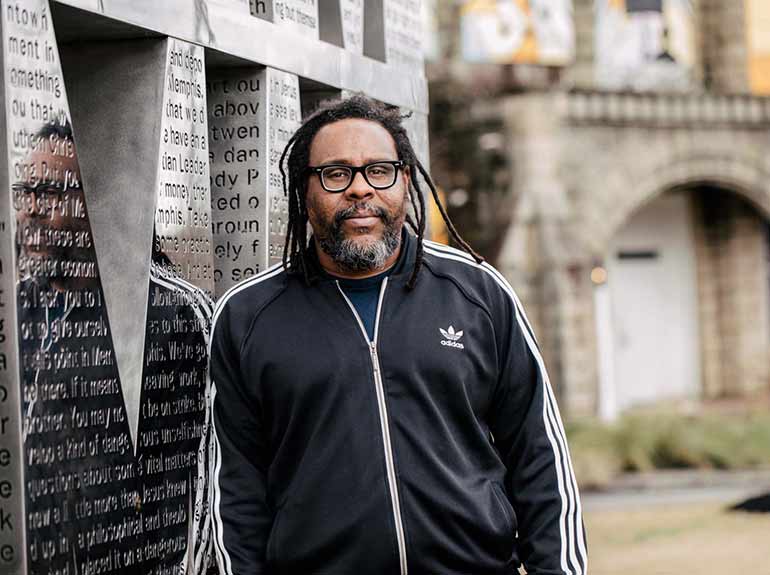
Dr. Todd Lawrence
Dr. Lawrence teaches African American literature and culture, folklore studies, and cultural studies. Todd's research and teaching areas include the Black Arts Movement, James Baldwin, racial passing, black speculative writing, and ethnographic writing. His work straddles several areas, but generally sits at the intersection of identity, narrative, community, and culture. Recent work includes the book, When They Blew the Levee, an ethnographic study done in collaboration with former residents of Pinhook, Missouri.
Dr. Wilkinson is the Director of the Luann Dummer Center for Women and her home department is English. She is the co-founder of the Sports Studies program. She teaches courses in English, Sports Studies, Women, Gender, and Sexuality Studies, and American Culture and Difference. Her areas of expertise include Native Women's Literatures, Women and the Environment, and Sports Literatures. She regularly teaches courses on critical ecofeminism, sport and social justice, and the literatures of Heid and Louise Erdrich (along with other Indigenous women's literatures). She is currently working on a pedagogical article focused on teaching the poetry of Heid E. Erdrich and an article on women's sport and suffrage. Her most recent publication is “‘Los Angeles Is for Everyone,’ ‘Pay Us What You Owe Us’: The Long History of Women Athletes Leading the Resistance" for Ms. Magazine. You can also find her in and around the Twin Cities singing lead for her band Wilkinson James, or in a pool, on a bike, or running a trail, training for the YWCA triathlon.
Dr. Davis researches and teaches technical and professional writing. She is particularly interested in how digital platforms shape the writing work and labor that professionals perform, such as the work of content strategy and moderation. As part of her membership in the Building Digital Literacy research cluster within the Digital Life Institute, she collaborates on projects that examine how instructors can best support students’ development as insightful, rhetorically skilled, and justice-focused digital writers.
If you've been out of school for a while or aren't sure about pursuing this degree, taking non-degree classes might be an ideal choice. When you sign up you will still participate as a full class member with a variety of students and faculty members. This option also gives you the chance to create a writing sample that can be used in the degree-seeking application. From there you can evaluate whether the program's offerings fit your needs, interests and abilities. If you decide to pursue the M.A. degree, a maximum of 10 credits may be approved for transfer into the program.